Wholesale Dorstenia foetida from China: Base Size & Plant Form
Compare wholesale Dorstenia foetida from China with clear basal measurements, plant-form grades, propagation records and current photographs for buying inquiries.
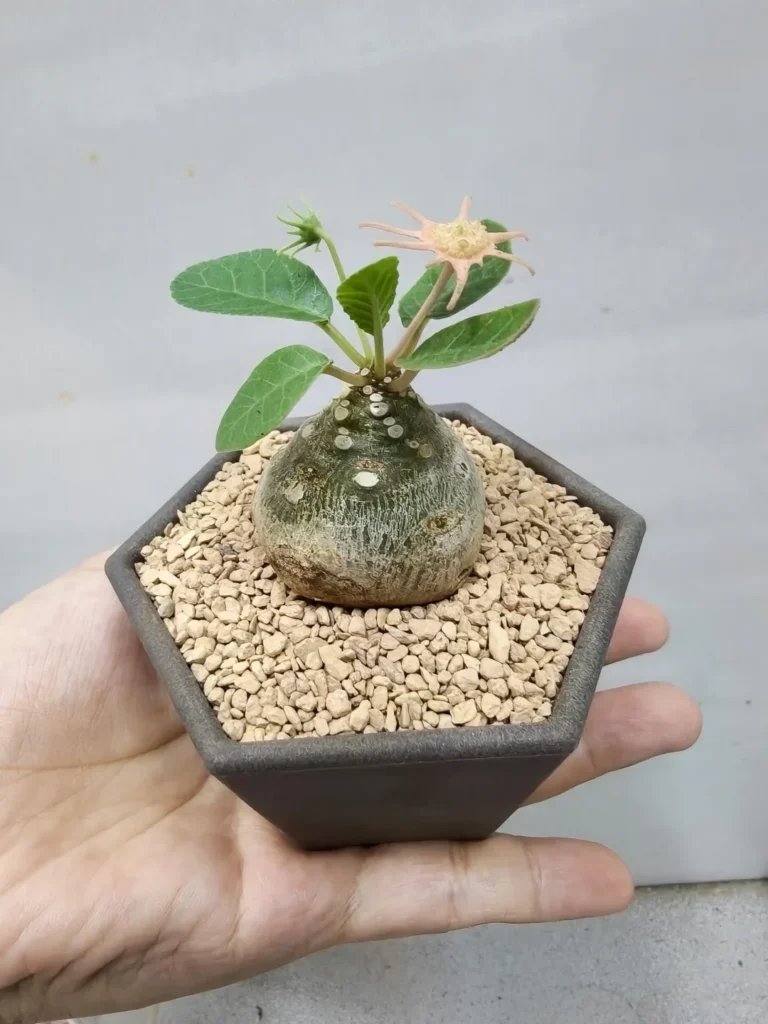
When buying wholesale Dorstenia foetida from China, define the plant form before comparing quotations. A compact leafy plant with a rounded base and a taller branching plant may share a name while fitting different retail displays. A clear inquiry makes those differences visible through measurements, individual photographs and an agreed grading method.
Our plant catalogue includes Dorstenia foetida, selection CAP-K0017. Use that code to start a buying discussion, together with your requested dimensions and quantities. The photograph accompanying this guide illustrates plant form; it does not authenticate an offered batch.
Confirm the botanical name and selection label
Kew’s Plants of the World Online accepts the name Dorstenia foetida (Forssk.) Schweinf. and places it in Moraceae. It describes a succulent subshrub. Use the scientific name on the inquiry and keep a seller’s descriptive form label in a separate field.
Names such as “round base,” “compact form” or “large specimen” need a definition. They should not automatically be treated as authenticated cultivars, evidence of age or proof of a particular propagation method. If a subspecies, locality or special selection is offered, ask what record supports that identification before repeating the claim to your customers.
Keep other Dorstenia species and unidentified plants on separate order lines. A similar swollen stem or leaf shape is not enough to combine them under one name.
Specify the dimensions that a buyer can compare
For procurement, describe the visible swollen base separately from the overall plant. Ask the supplier to identify the measurement points in a photograph. A pot diameter describes the container, while total height can include foliage and conceal a very different base size.
| Buying field | Measurement or record | Photo to request |
|---|---|---|
| Basal width | Maximum visible swollen-base width; state whether measured above the medium line | Front view with a ruler at the same plane as the base |
| Perpendicular width | Second width at roughly a right angle when the base is uneven | Side view showing the narrower dimension |
| Stem height | Medium line to the top of the main stem, excluding leaves | Side view with start and end points marked |
| Overall height | Medium line to the highest leaf or stem tip, explicitly defined | Whole-plant image without cropping the crown |
| Branching form | Single stem or branched; visible branch count when relevant | Front, side and overhead views |
| Container | Pot dimensions recorded separately from plant dimensions | Whole pot and plant, with the item code visible |
Use one unit system consistently. One inch equals 2.54 cm. If both units are needed, nominate the primary unit and round the converted display figures consistently; avoid creating a tighter grading tolerance merely by converting units.
Separate form, foliage and propagation records
Agree which features matter to your business: a compact silhouette, a visible rounded base, branching, or an established leafy appearance. Assess those features separately. A dense crown can look attractive in a front photograph while hiding the stem or a branch junction.
Record the foliage condition on the photograph date and ask how the plant is expected to be presented for the offered shipment. Do not infer root condition from leaf cover. Likewise, an inflorescence in a display photograph should not become a promise that every ordered plant will arrive flowering.
Ask the supplier to state the propagation method and cultivated source for the offered plants. Request supporting records for claims that affect your purchase. Base shape and apparent size alone do not prove seed-grown origin, plant age or a documented nursery history.
Choose batch grading or individual approval
For a relatively uniform group, agree a size band and form description, then request photographs of the spread within that group. Ask to see the smallest, middle and largest examples rather than only the most photogenic plant. Confirm whether obvious branch asymmetry, scars or other visible differences are acceptable within the grade.
For distinctive plants, use individual approval: one plant code, one photo set and one quotation line. An individual plant should not silently become a “similar plant” selection. Confirm the substitution rule before accepting the order, and keep that approval with the final buying list.
Our plant substitution checklist provides a practical approval structure. For a broader caudex shortlist, see the caudiciform sourcing guide.
Request root and base evidence at the appropriate stage
Discuss the planned delivery form before asking for handling that could disturb the plant. Request available evidence of the base and root condition, plus any preparation date relevant to the quotation. If bare-root preparation is agreed, decide when photographs will be supplied and how item codes will remain associated with the plants.
- Keep roots, swollen base and any healed cuts visible in the agreed review photographs.
- Ask the supplier to identify any recent cutting, repotting or preparation reported for the offered plants.
- Keep undocumented history as unconfirmed rather than converting it into a sales claim.
- Agree the receiving evidence and discrepancy-reporting process before dispatch arrangements are finalized.
Use our bare-root and potted shipping comparison and receiving checklist to structure that discussion. A photograph alone cannot guarantee root health or arrival condition.
Review the exact U.S.-bound shipment
The importer should check the exact botanical identity, Chinese origin, plant form and proposed shipment against current USDA APHIS guidance and ACIR. APHIS requirements vary by commodity and origin. A catalogue listing or reference photo does not establish eligibility, an exemption or the required documents for a specific shipment.
Request a Dorstenia wholesale quotation
Send CAP-K0017 with the scientific name, requested basal-width band, stem and overall height definitions, quantity, preferred form and destination through our wholesale inquiry form or WhatsApp. State whether you want a graded batch or approval of individually coded plants.
We are sourcing Dorstenia foetida, catalogue reference CAP-K0017, for [business type and destination]. Please discuss [quantity] with [basal-width range] and [preferred stem/branch form]. Please provide current measurement photos, propagation information where documented, the offered root/delivery form and an itemized quotation. We would like [batch grading / individual plant approval].
Frequently asked questions
Is pot diameter a reliable Dorstenia size grade?
It is a container measurement. Specify the swollen-base dimensions and clearly defined plant heights separately, then use the pot size as additional context.
Does a rounded base prove that a plant is seed-grown?
No. Ask for the propagation record. Treat an unsupported inference from shape as unconfirmed.
Can a reference photo identify the exact plant I will buy?
No. Request a current offered-batch photo set or individually coded plant photos, and link your written approval to the quotation.