Wholesale Cactus from China: Benefits for U.S. Sellers
Explore wholesale cactus and caudiciform sourcing from China: distinctive selections, competitive costs, USD 200 trials and practical tips for U.S. sellers.
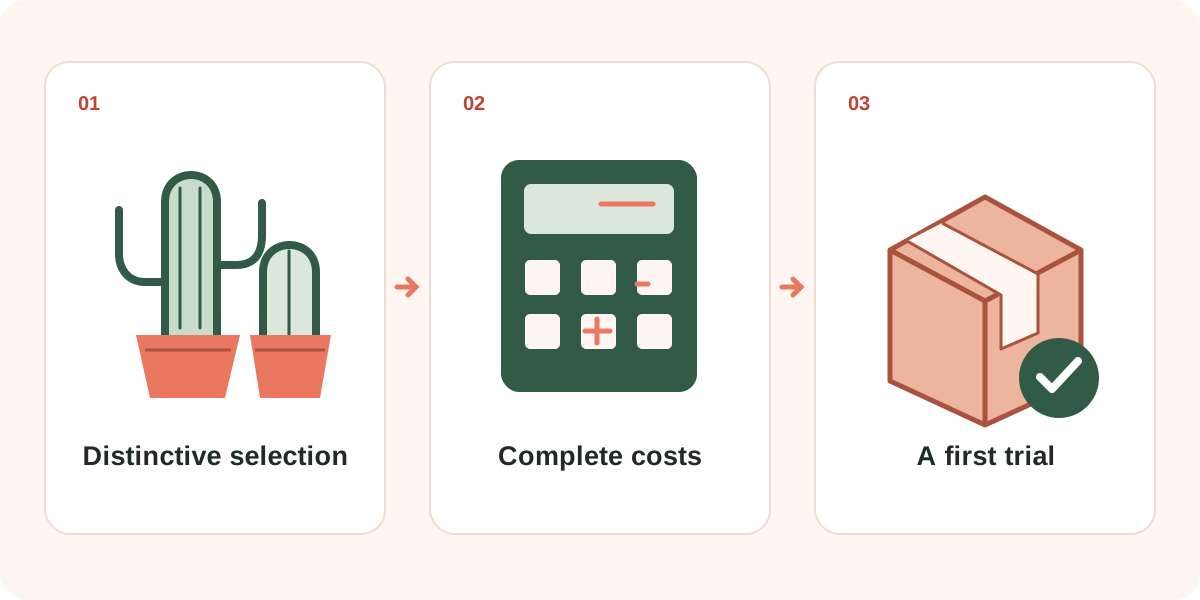
For a U.S. plant shop, online seller or specialist nursery, buying wholesale cactus from China can open up two useful opportunities: a more distinctive assortment and a more competitive purchasing cost. The strongest opportunity is often a particular cultivar, plant form or size band that is difficult to source from your usual domestic suppliers.
At China Arid Plants, operated by Jinrui E-commerce Co., Ltd., we help buyers review cactus and caudiciform selections, specify the plants they want and plan an order around their destination. Here are six reasons to request a quotation, plus a practical way to decide whether importing makes sense for your business.
Find a selection that suits your customers, compare the complete delivered cost and test the supply process before committing to a larger order. Trial orders start at USD 200; the final scope, packing and freight are confirmed in your quotation.
1. Offer plants your customers do not see everywhere
Distinctive inventory gives a small seller a reason to be remembered. A customer comparing similar shops may notice an unusual cactus form, a particular pattern or a well-shaped caudex before they compare prices. For a specialist retailer, that makes selection an important part of the purchasing decision.
Chinese cultivation and sourcing can provide another route to cultivars, forms and batch sizes that may be uncommon or intermittently available through your local U.S. suppliers. The opportunity is market availability: a plant grown in China is not necessarily native to China or exclusive to Chinese growers. Stock and import eligibility must be checked for the exact plant.
A useful request describes the gap in your current range. Are you looking for compact plants for online sales, a consistent display size or selected specimens with a particular silhouette? Send botanical names when known, reference photos and the characteristics that matter. Our plant sourcing service can then check suitable options instead of guessing from the word “rare.”
- For online sellers: look for recognizable forms that photograph clearly and can be described accurately.
- For plant shops: plan a coherent assortment across your preferred retail size bands.
- For collectors’ markets: specify the exact cultivar or visual features and whether individual plant approval is necessary.
2. Compare competitive pricing shaped by labor and operating costs
Plant production involves repeated hands-on work: propagation, potting, growing, selection, preparation and packing. Labor-related costs therefore matter when a nursery prepares a wholesale batch. Differences in local labor and operating costs can give sourcing from China a price advantage for suitable orders.
For buyers considering our service, this is a reason to compare a China quotation with equivalent U.S. stock. Batch purchasing and an agreed size specification can also help the supplier price the order efficiently. A lower nursery purchase price can leave more room in your budget for presentation, marketing and the receiving work your business carries out.
The comparison should use the same plant identity, size, quantity and presentation. A smaller plant or a looser size range is not an equivalent offer. Request the plant price and the separate packing and shipment details so you can see where the potential saving comes from. Our wholesale cactus buying guide explains how to prepare a comparable specification.
Importing is not automatically cheaper for every assortment. Freight, document charges, applicable import costs and recovery work can change the result, especially for a very small shipment. Compare the complete landed cost before deciding that a lower plant price means a better purchase.
3. Build a mixed assortment around your own market
A new seller does not need every available variety. A more useful starting point is a small range with a clear customer: compact cacti, sculptural caudiciforms or a selection chosen around a display size. Combining suitable items in one sourcing request lets you discuss availability, specifications and packing together.
Send one buying list with a quantity for each item. Mark which plants are essential and which may be replaced with an approved alternative. We review whether the proposed items can be supplied and packed together; mixed orders depend on availability and destination requirements.
This approach can help you test different product lines without building your entire inventory around one plant. Keep the initial mix manageable, record interest and sales by item, and use the results to shape your next buying list. For caudex-led selections, read our caudiciform measurement and selection guide.
4. Start with a USD 200 trial before scaling up
Trial orders at China Arid Plants start at USD 200. A first order gives you a practical opportunity to evaluate communication, the agreed selection, packing and the receiving work involved. It can also help a new seller learn which sizes and forms suit their audience before placing a larger order.
Agree what the trial budget covers and request the complete total, including the quoted packing and freight. The USD 200 starting point is not a promise of an all-inclusive delivered price or an exemption from import requirements.
For orders of USD 500 or less, payment options are PayPal, credit card or bank transfer. Orders above USD 500 use bank transfer. Confirm the payment instructions on the quotation or invoice before paying. Use our trial order planning guide to choose an assortment that answers your most important buying questions.
5. Check photos, measurements and packing before dispatch
Ordering plants remotely is easier when everyone agrees what is being supplied. Ask for current selection photos where available, clarify whether they show exact specimens or a representative batch, and define the measurement method. For cacti, plant diameter and pot diameter are different. For caudiciforms, the point used to measure the caudex should be agreed.
We work through availability, specifications, packing, quotation and dispatch planning as separate stages. This gives you a chance to resolve questions before preparation moves ahead. Our seven-step ordering process explains the information needed at each stage.
Discuss bare-root and other permitted formats for the actual selection. Removing pots and growing medium can reduce weight or volume in some orders, but the plants still need suitable protection and a receiving plan. Review our bare-root versus potted shipping guide when comparing formats.
6. Make the decision using cost per saleable plant
A strong purchasing decision considers what you can actually sell after receiving and preparing the shipment. Ask for a complete quotation, list your local costs and allow for realistic plant recovery and any losses. This helps you judge whether the selection and cost advantage suit your business.
Cost per saleable plant = (plant purchase + packing and export documents + freight + applicable import and handling charges + receiving and recovery costs) ÷ number of saleable plants.
| Buying factor | What to compare |
|---|---|
| Selection | Exact identity, form, measurements and available quantities. |
| Plant price | The same specification and quantity, with any packing charges identified. |
| Delivered cost | Freight, documents, applicable import costs and local handling. |
| Receiving work | Unpacking, potting, recovery time, growing space and staff. |
| Retail fit | Expected customer demand, presentation and realistic selling prices. |
Domestic supply may be the practical option when you need immediate replenishment or a very small quantity of a common plant. A China sourcing request is particularly useful when your priority is a specific selection, a suitable batch or a meaningful landed-cost advantage. Compare written offers rather than assuming either route is always best.
What U.S. buyers should confirm before ordering
U.S. import requirements depend on the exact plant and its country of origin. Check your buying list in the USDA APHIS Agricultural Commodity Import Requirements database, and confirm the applicable permit, phytosanitary, growing-medium and inspection conditions before an order is accepted. Protected plants may have additional requirements; do not assume that every plant pictured online can be imported.
Send the requirements confirmed by your importer or authority to our team. We can then discuss which selection, preparation and document arrangements are available for the proposed shipment. Start with the official APHIS guide to importing plants and plant products if this is your first import.
Common questions from U.S. plant sellers
Are Chinese-grown varieties unavailable in the United States?
Some cultivars, forms and batch sizes may be harder to find through a particular U.S. supply network. Availability changes, and “grown in China” does not mean “only found in China.” Send the exact plants you need so current supply and import eligibility can be checked.
Will buying from China always be cheaper?
No. Competitive labor-related and nursery costs can support a lower purchasing price, but the complete shipment cost and your receiving work determine whether an order offers a saving. Compare equivalent specifications and cost per saleable plant.
Can a new online seller begin with a small order?
Yes, trial orders start at USD 200, subject to the selection and order arrangements being confirmed. Packing, freight and any required documents are quoted for the actual order. Start with a focused assortment and a clear receiving plan.
Request an assortment and landed-cost quotation
Send plant names or reference photos, preferred sizes, quantity per item, your U.S. receiving city and ZIP code, and any import requirements already confirmed. Tell us whether your priority is a distinctive selection, a lower equivalent purchasing cost or a manageable first trial.
Request a wholesale plant quotation, message us on WhatsApp: +86 159 9883 0641, or email info@chinaaridplants.com. We will review available options and the quotation scope with you.