Wholesale Mammillaria from China: Clumps & Spine Grades
Buy wholesale Mammillaria from China with clear body sizes, clump footprints, head counts, spine grades and root formats. Prepare a comparable nursery inquiry.
Buying wholesale Mammillaria from China is easier when each order line describes a measurable plant form. A solitary ball, a compact cluster and a large multi-head clump can occupy the same pot size while offering very different retail presentations. Define the form and measurements before comparing a price per plant.
This guide helps nurseries and specialist retailers specify clumps, spine appearance and the evidence needed for a quotation. Start with our Mammillaria catalogue selections and use the general cactus buying guide for the complete purchasing sequence.
Keep the plant name and growth form together
Record the botanical label, any cultivar or trade name, and the supplier’s item code. A translated nursery nickname is useful for communication, but it should not replace the botanical identity. Ask the seller to explain uncertain labels before you use them on your own retail tags.
Specify solitary plants, naturally attached clusters or an agreed mixed assortment. Ask whether a pictured group is one connected clump or several plants arranged in a pot. A photograph from above may not answer that question. Where propagation history matters, ask separately whether the plants are seed-grown, offsets or grafted, and what records support the description.
For grafted material, include the rootstock identity and dimensions. Keep unrooted offsets, recently degrafted plants and established rooted plants on separate order lines so your nursery can plan receiving work and pricing consistently.
Measure the body and the clump footprint separately
For a solitary plant, request the widest body diameter, excluding projecting spines, flowers and the pot. For a clump, add the overall body footprint and approximate number of established heads. Record height if your retail display or packaging depends on it.
Write down whether the cluster footprint excludes spines. That distinction matters when long spines extend beyond the bodies. Pot diameter is a separate field: it describes a container, not the size of the plant group. Use a ruler placed beside the plant and ask for both top and side views.
| Order field | What to agree | Evidence to request |
|---|---|---|
| Identity | Botanical label, selection name and item code | Readable labels linked to the proposed batch |
| Form | Solitary, connected clump or mixed assortment | Top and side views; connection details where needed |
| Body size | Minimum and typical body diameter, excluding spines | Representative plants beside a ruler |
| Clump grade | Footprint, head-count range and height if relevant | Ordinary examples and the smallest accepted clump |
| Spine appearance | Visible coverage, accepted marks and breakage tolerance | Close views under consistent light |
| Root format | Rooted, grafted, degrafted or unrooted condition | Relevant root and graft-union photographs |
For example, a buying line could request “connected clumps, body footprint 5–8 cm excluding spines, with the accepted head-count range to be quoted.” This is a specification example, not an offered grade. Ask the supplier which measurable ranges can actually be assembled before you approve the assortment.
Turn spine appearance into a clear buying standard
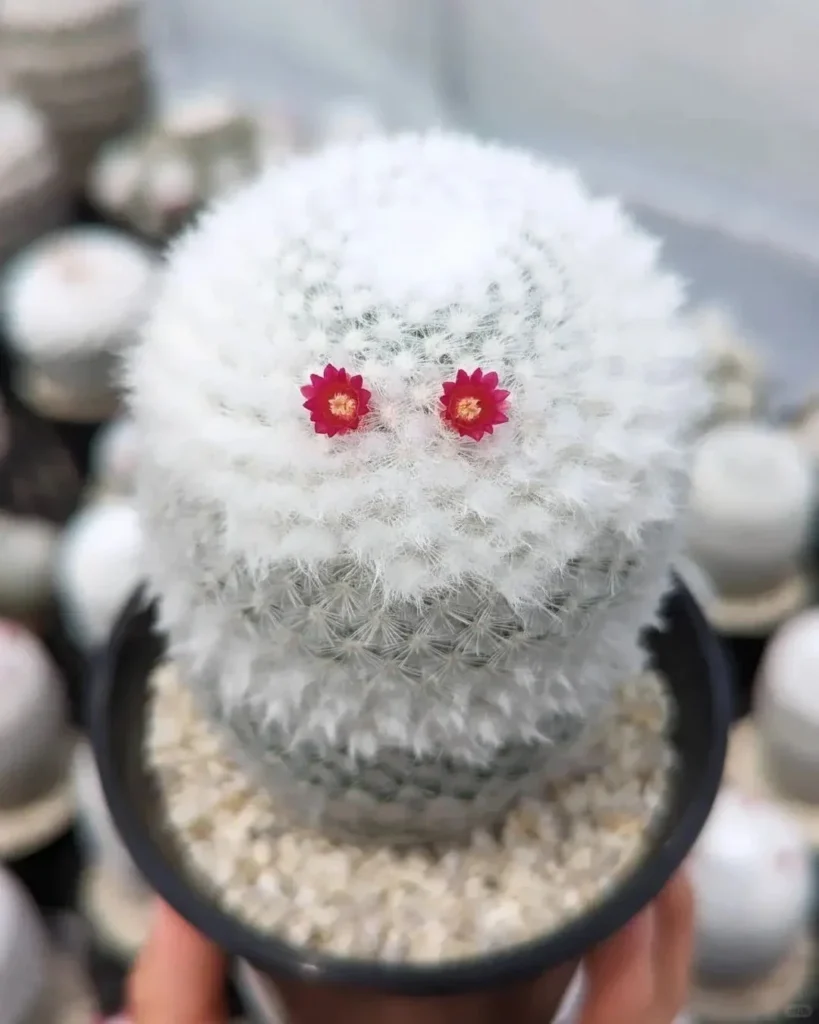
Terms such as “snowball,” “premium” or “dense-spined” do not establish a shared grade. Describe the visible presentation you need: even coverage, an agreed range of spine color, an intact growing point and the extent of acceptable cosmetic marks. Set different criteria where different selections naturally look different.
Ask for an ordinary batch example and one example at the lower accepted appearance limit. Review close photographs without filters that change the visible color or conceal marks. An attractive top view is useful, but it cannot establish root condition or the absence of a problem hidden beneath dense spines.
Keep flower presentation separate from the core specification. A flowering reference image can help a buyer recognize the intended look, but a future shipment should be approved against the agreed plant grade. If buds or flowers matter to a seasonal sale, ask for the actual proposed batch condition and make any acceptance criteria explicit.
Review the whole batch, then agree how it will be selected
Request a dated tray overview, close views of representative plants, ruler photographs and any relevant root details. Match these to the order line and quantity. A few individually selected photographs cannot show the distribution of sizes and forms across a bulk offer.
Decide whether the order is an individually approved selection or plants chosen within an agreed range. For mixed assortments, state the composition by selection and form. Ask how smaller heads, asymmetric clusters and separated offsets will be counted. Agree that substitutions or changes to the form need your approval before dispatch.
Save the approved photographs and specification sheet for your receiving team. The cactus shipment receiving checklist helps connect those purchasing decisions to arrival inspection.
Compare prices using the same selling unit
Confirm whether “one plant” means a single body, one connected clump or one pot containing several plants. Compare quotations only after that unit, the size band, appearance standard and root format match. Otherwise a lower unit price may simply describe a smaller or different product.
Ask for plant price, selection or preparation charges, packing, documents and transport to be identified clearly. Use our quotation comparison guide to align the delivery scope and payment currency. Also ask how the agreed specification will be checked before packing and how discrepancies will be documented.
Confirm the actual U.S. shipment requirements
APHIS directs importers to ACIR to check requirements by commodity and country of origin. Review the exact plant identity, China origin and proposed shipment form through the official APHIS import guidance. Confirm applicable documents and responsibilities before committing to a shipment.
Resolve uncertain identity or rootstock information early. A supplier’s nursery label and a packing photograph serve different purposes from the official requirements for a particular shipment.
Send a quotation-ready Mammillaria buying list
Please quote the Mammillaria selections in my buying list by botanical label and item code. For each line, confirm solitary or connected-clump form, body diameter, clump footprint and head-count range where relevant, accepted spine appearance, root format and quantity. Please include dated batch photographs with a ruler and itemize preparation, packing, documents and freight for our destination.
Add your business type, destination and desired retail presentation, then send your wholesale inquiry. These details help turn a visual preference into a comparable offer.
Frequently asked questions
Is pot size enough to grade a Mammillaria clump?
No. Record plant-body measurements and the clump footprint separately. Pot size can be an additional container or presentation field.
Should every small offset count as a head?
Agree on the counting method with the supplier. State whether the range refers to established heads and how small emerging offsets will be treated.
Does a white-spined photograph confirm the species?
Use the supplier’s label and supporting identity information. Visible spine appearance alone is not enough to confirm a precise botanical name.