Wholesale Echinopsis from China: Names, Seedlings & Clones
Source wholesale Echinopsis from China with clear seedling or clone records, botanical labels, body measurements and flower-photo evidence for nursery orders.
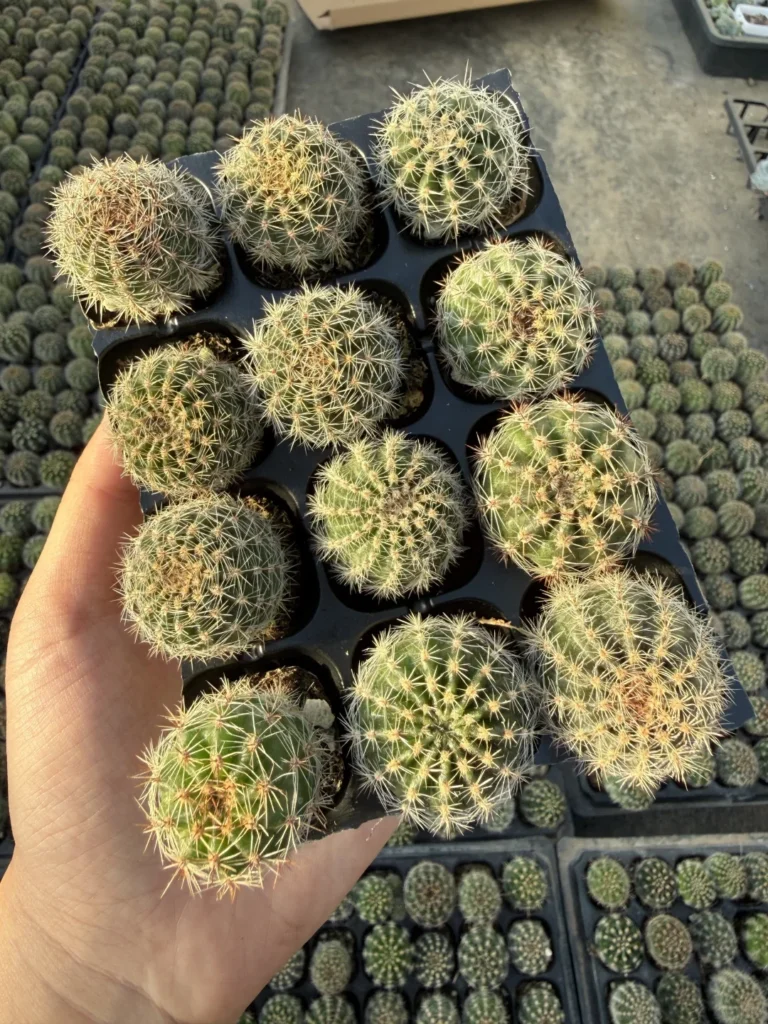
A wholesale Echinopsis inquiry needs the plant’s label and propagation history alongside its size. State whether you want a variable seedling mix or a documented named clone, then ask which plants the flower photographs represent.
Keep the catalogue label and botanical identity together
Start with a product code and the full name used by the supplier. Separate a species label, a named hybrid clone and a mixed seedling batch on the buying list. A flower-color description should have its own field.
Names also change between botanical references. Kew’s Plants of the World Online treats Echinopsis subdenudata as a synonym of Echinopsis ancistrophora. Retain the supplier’s original label when checking a name, then record the reference used for the accepted name. A taxonomic synonym does not establish that a pictured plant is a particular hybrid clone.
The Echinopsis catalogue category is a starting point for a shortlist. For a named-hybrid enquiry, include the code and exact wording from an entry such as CAP-C0764, then ask which propagation and identity records accompany the proposed plants.
Ask whether the order is seedlings or a documented clone
Seed-grown hybrids can differ from their parents. In its account of breeding Echinopsis hybrids, Abbey Brook Cactus Nursery explains why vegetative propagation matters when maintaining a named selection. A cross name and a selected clone name therefore answer different buying questions.
For seedlings, request the recorded cross or seed-lot identity where it exists, and agree whether a variable flower-color assortment is acceptable. For a named clone, ask how the plants were multiplied and how the link to the original selection was retained. Keep an unknown parentage field empty rather than filling it from a similar photograph.
Keep propagation history separate from current root condition. An offset can be offered rooted or unrooted; a grafted plant needs a separate rootstock description. An own-root label alone does not show whether a plant was raised from seed or from an offset.
Build one comparable line per selection
| Order field | Ask the supplier | Keep with the quotation |
|---|---|---|
| Identity | Species, hybrid name or seed-lot label; any documented synonym | Product code and the original label wording |
| Propagation | Seedling, offset, cutting or graft; source record if claimed | Propagation statement for this order line |
| Plant size | Body diameter and body height; units and agreed size band | Ruler view with spines and container excluded from body measurements |
| Root condition | Rooted or unrooted; own-root or grafted; rootstock details if present | Base or root photograph linked to the selection |
| Flower evidence | Which plant or parent produced the pictured flower? | Photo label, date and whether it is a parent, example or offered plant |
| Commercial scope | Quantity by selection, packing format and itemized costs | Approved list and any agreed substitution limits |
Measure a single body and a clump separately. If offsets are part of the selling unit, specify whether the price covers the whole clump or one detached plant. For grafts, record scion size separately from rootstock height. Use the same units throughout the comparison; one inch equals 2.54 cm.
Connect flower photographs to the plants being quoted
A picture of a parent plant supports a description of that parent. It does not establish the flower of every seedling in a lot. Ask the supplier to distinguish an offered plant’s own flowering record from a parent image or an illustrative color example.
Keep the body visible in the photo set. A tray overview can show the proposed mix, while side views show body height and offsets. A separate close-up can record the flower without hiding the plant used for size approval. The batch photo checklist covers the wider approval record.
The RHS profile for Echinopsis oxygona lists propagation by seed or offsets. Use species-specific growing information when planning nursery space. A cultivation profile for one species cannot set a flowering date or transport tolerance for every hybrid.
Send a shortlist with the evidence you need
We are sourcing Echinopsis for a nursery or plant shop. Our selections are [codes and labels], with [quantity per selection] and a body size of [diameter and height, with units]. Please state propagation, current root condition and the basis for any named-clone or flower-color claim. Destination: [city, state and country]. Please quote packing and other charges separately.
Attach your marked shortlist when you request a wholesale quotation, or discuss it on WhatsApp. Agree changes using the substitution approval process before the order is packed.
For a U.S. shipment, confirm the exact identities, origin and shipment form with the importer before approving dispatch. USDA APHIS directs buyers to current commodity- and origin-specific requirements. A catalogue entry does not confirm import eligibility or the documents for a particular shipment.
Questions buyers ask
Can seedlings be ordered as a named clone?
Request the propagation record behind that description. Seedling parentage and a documented vegetatively multiplied clone are different specifications. Agree the label you will receive before comparing prices.
Does a larger Echinopsis mean it will flower on arrival?
Do not use body size as a flowering promise. Ask for the offered plant’s flowering history and discuss your growing conditions. Keep any requested flowering stage separate from the size grade.
What should an offset quotation specify?
Record whether it is attached, detached, rooted or unrooted, together with body measurements and the agreed selling unit. Add the mother-plant identity if a named clone is being claimed.