Wholesale Cyphostemma juttae: Caudex Grades & Seasonal Form
Source wholesale Cyphostemma juttae from China with stem measurements, branch photos and growth-stage records. Prepare a clear caudex plant buying inquiry.
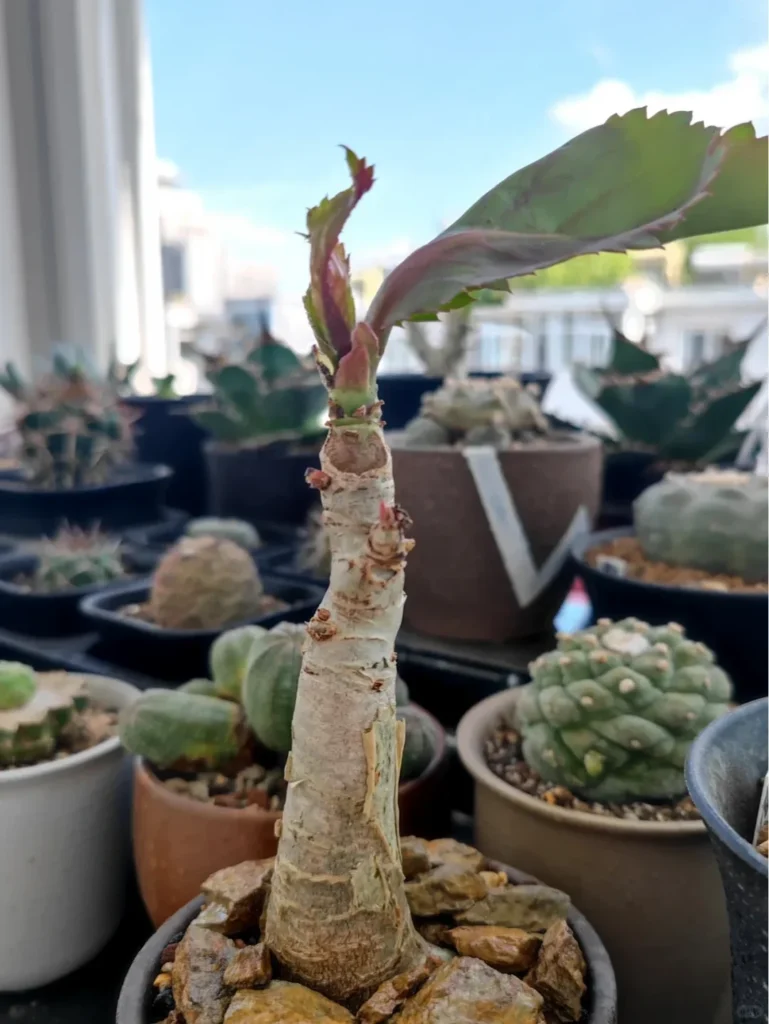
When buying Cyphostemma juttae for a nursery or specialist plant shop, compare the swollen stem and branch structure separately from the foliage. Ask when the photos were taken and what growth stage the proposed plants are in. A leafy display photo and a leafless sale plant need a clear explanation before you compare their grades.
Start with the species and catalogue reference
Cyphostemma juttae belongs to Vitaceae. SANBI’s PlantZAfrica account describes a succulent from Namibia with a swollen trunk, papery peeling bark and fleshy leaves. These features help explain its appeal as a container plant; they do not authenticate an individual seller’s plant.
Our catalogue reference CAP-K0092 is a starting point for a sourcing inquiry. Keep the full scientific name on the buying list, because a common name such as tree grape can be too broad for an order. If a supplier proposes another species, request its name and photographs and approve it as a separate line.
Build the grade around the stem
Choose the shape you want to sell: a compact swollen base, a taller tapering trunk or a branched specimen. Describe that preference with photographs and measurements. Two plants with the same maximum width may have very different outlines, so a single size figure leaves too much room for interpretation.
| Measurement or record | How to describe it in the inquiry |
|---|---|
| Maximum stem width | Measure the widest swollen part and identify the measurement line in a photo. |
| Second width | Add a measurement at right angles where the base is oval or uneven. |
| Structural height | Measure from the agreed substrate level to the highest persistent branch; record leafy height separately. |
| Branch structure | Use front and side views to show the number, placement and outline of the branches. |
| Pot and packing size | Keep container dimensions and proposed packing dimensions separate from plant measurements. |
Use centimetres consistently, or ask the supplier to show both centimetres and inches. Agree the permitted variation within each grade. For a specimen purchase, identify the exact plant in the photos; for a batch, ask how the plants will be grouped and counted.
Understand the seasonal photograph
SANBI describes C. juttae as mainly summer-growing, with leaves falling in winter. For a wholesale order, ask the nursery to record its current growth stage and growing conditions. Confirm whether your approval photo shows the plant as it will be prepared for the order, or an earlier leafy stage.
Agree what should be retained on the plant, how branches will be protected and whether any pruning is proposed. Keep dated views of the same specimen where seasonal change would otherwise make identification difficult. Do not classify a leafless plant as dead, or accept it as healthy, from leaf absence alone; ask for a condition review.
The SANBI cultivation account also stresses drainage, caution with watering and protection where severe frost occurs. Plan a sheltered receiving area and confirm the nursery’s handover advice for the plants’ actual condition. Those cultivation notes are not a temperature or transport guarantee.
Review bark, roots and preparation
Papery peeling bark is a described feature of this species. Ask for close-ups when you need to distinguish ordinary surface texture from a mark that needs explanation. Request dated views of the base and branch junctions, and record any agreed acceptance limits in the order.
Confirm whether the plants are seed-raised or propagated from cuttings, then ask about their current roots. SANBI describes both propagation methods; a particular specimen’s history still comes from its grower’s records. Agree when root evidence will be reviewed and how the plants will be presented for dispatch. The caudiciform sourcing guide helps you organise measurements and specimen photos.
Leave a usable record for the receiving team
- Put the scientific name, item code and agreed grade on the buying list.
- Keep dated approval photos and the growth-stage note with that list.
- Record any pruning, preparation or replacement that you have approved.
- Agree the photos and measurements needed to report a discrepancy on arrival.
Give the receiving team the plant-receiving checklist and adapt the plant-measurement fields to the stem and branch structure described here. Keep the original labels until the plants have been matched to the order.
Request a Cyphostemma juttae quotation
Send an inquiry for CAP-K0092 with your preferred stem shape, measured size range, quantity and destination. Attach reference photos and say whether you need individual specimen approval or a consistent batch grade. Ask for itemised preparation and delivery costs so the proposed plants and the quotation can be reviewed together.
Questions before ordering
Should I compare plants by their leafy height?
Keep leafy height as an additional measurement. Use the swollen stem and persistent branch structure for the main grade, with the nursery’s current growth stage recorded alongside it.
Does peeling bark mean the plant is damaged?
Papery peeling bark is a recognised feature of the species. A photo may still show a separate mark that needs review. Request close-ups and an explanation of the specific area before approving the plant.
Can I request a similar plant instead of an exact specimen?
Yes, as a buying specification: agree measurable size and shape limits and approve the proposed batch. If a replacement falls outside those limits, ask for a revised line and photos before accepting it.