Wholesale Adenium from China: Propagation, Grafts & Caudex Grades
Source wholesale Adenium from China with clear propagation records, graft details, caudex measurements and photo approvals for nursery buying inquiries.
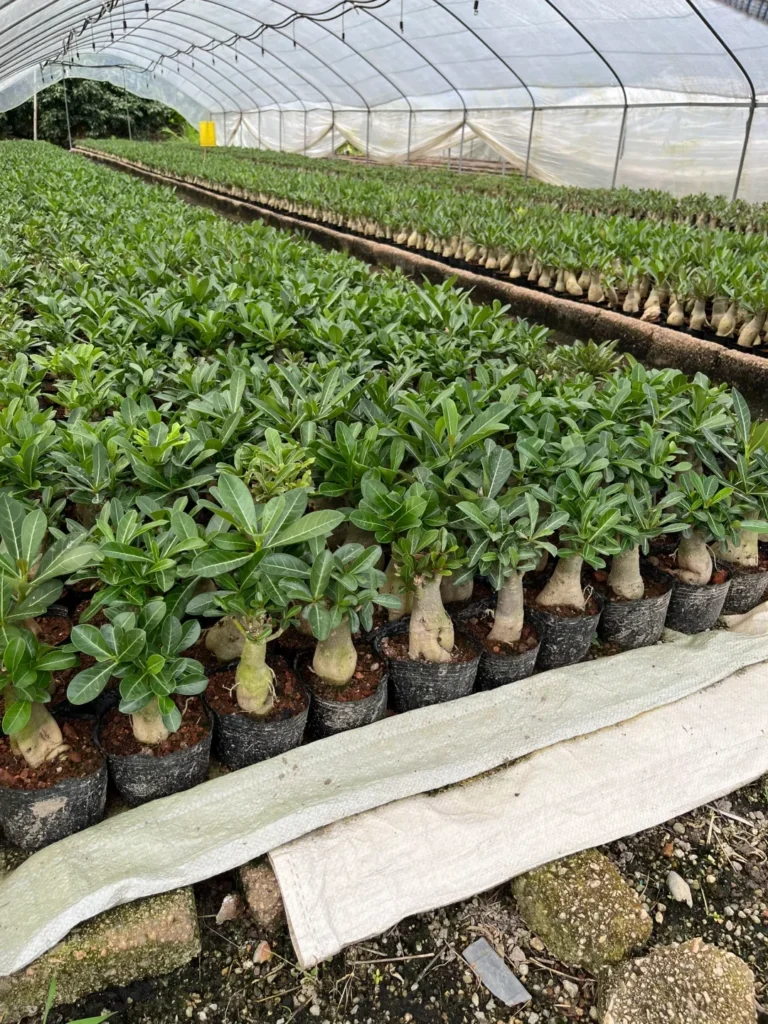
For a nursery buying wholesale Adenium from China, the most attractive flower photograph may leave the main procurement questions unanswered. A useful buying specification identifies the plant, explains its propagation and graft status, and defines how the caudex or swollen base is measured.
This guide focuses on choosing comparable Adenium order lines for nurseries and specialist retailers. It helps separate a named selection from the evidence needed to assess the plants proposed for a quotation.
Separate the botanical name from the selection label
Kew’s Plants of the World Online accepts Adenium obesum (Forssk.) Roem. & Schult. Use the scientific name on the buying list and retain the supplier’s horticultural label as an additional field.
The catalogue includes Adenium obesum, CAP-K0087, and separately coded named selections such as CAP-K0086, listed as cv. Milky Way. Ask how a selection is identified and what records support the name. A trade label or a reference photograph alone does not authenticate cultivar identity.
Record propagation history and present root form
Ask two questions: how was the proposed plant produced, and what form will be supplied? A seed-grown rootstock can carry a grafted scion, so the phrase “seed grown” needs a stated subject. Avoid treating that phrase as proof that the complete plant is ungrafted.
| Proposed form | Clarification to request | Evidence to retain |
|---|---|---|
| Ungrafted seed-grown plant | Whether the complete plant is seed grown and ungrafted | Whole-plant views and available propagation records |
| Own-root vegetative plant | Propagation method and current rooting condition | Base views, root evidence and handling history where available |
| Grafted plant | Scion identity, rootstock identity and graft status | Readable labels, graft-union close-ups and whole-plant views |
| Unconfirmed history | Which facts remain unknown | Written limits of the supplier’s statement; no inferred age or method |
Keep rooting condition separate from propagation method. Ask what the supplier means by its root grade, whether the statement covers every plant or a sample, and what verification is possible before preparation. Request evidence without assuming that a potted photograph reveals the hidden roots.
Define the caudex grade with a repeatable measurement
Agree the measurement points before comparing quotations. Record exposed base width, its measurement height, and the exposed base height independently of the branches. If spreading roots are included in a measurement, label it as the root spread rather than calling it trunk diameter.
Measure total plant height and canopy spread separately. State the substrate line used in a potted photograph and whether any hidden portion remains unmeasured. Use centimetres throughout the buying sheet; inches can be added using 1 inch = 2.54 cm. Neither a large pot nor a substantial base proves a particular age.
Review the base and graft area as well as the flowers
- Request a front and side view of each individually selected specimen, or representative views across a defined batch grade.
- Include a ruler beside the exposed base and keep the measurement point visible.
- Ask for an unobstructed graft-area view when a graft is declared or needs clarification.
- Keep foliage and flower references linked to the same selection code, with dates and an explanation of what they represent.
- Request close-ups of scars, cuts or irregular forms that affect the agreed appearance grade.
A flower close-up can communicate a desired appearance, but it does not show the base, rootstock or overall structure. Do not approve a complete buying specification from that image alone. The caudiciform sourcing guide provides a wider supplier-review framework.
Build order lines around the intended selling unit
Decide whether you are selecting individual sculptural plants or buying a batch within an agreed grade. An individual specimen needs its own code and approval photos. A batch needs quantities by grade, a defined size range and clear limits for variation in form.
Ask for currency, the quoted unit, quantity, preparation and packing charges, and the delivery point covered by the offer. Keep freight assumptions separate from confirmed charges. If branch trimming or other preparation is proposed, agree its scope and the approval photographs beforehand. A change to plant form or size should return for review rather than being treated as an automatic replacement.
Confirm the actual U.S. import requirements before shipment
For U.S. buyers, review the botanical identity of the plant and any rootstock, country of origin, dimensions and proposed shipped form. Consult USDA APHIS’s current process and ACIR for the applicable requirements. This guide does not establish species admissibility, a permit exemption or clearance for the proposed plants.
Send an Adenium buying inquiry
Contact China Arid Plants with your catalogue codes or reference photographs, desired exposed-base dimensions, quantities, propagation/root-form preference and destination country/state. State whether you want individually approved specimens or a batch grade. You can also start the quotation discussion on WhatsApp. Prices need to be confirmed for the requested specification.
Frequently asked questions
Does “seed grown” mean the Adenium is not grafted?
Clarify whether the statement refers to the whole plant or only its rootstock. Record graft status separately and request appropriate views.
Should caudex width include spreading roots?
Only if your written method says so. For a comparable buying list, record exposed base width and root spread as different measurements.
Can a flowering photograph confirm a named selection?
It can be a visual reference, but identity needs supporting labels and records linked to the proposed plants. Ask the supplier to explain the evidence and any uncertainty.