Buying leafless caudex plants: what needs checking?
Review leafless caudex plants with dated photos, root records and a written next check. Compare wholesale offers without assuming that bare stems prove dormancy.
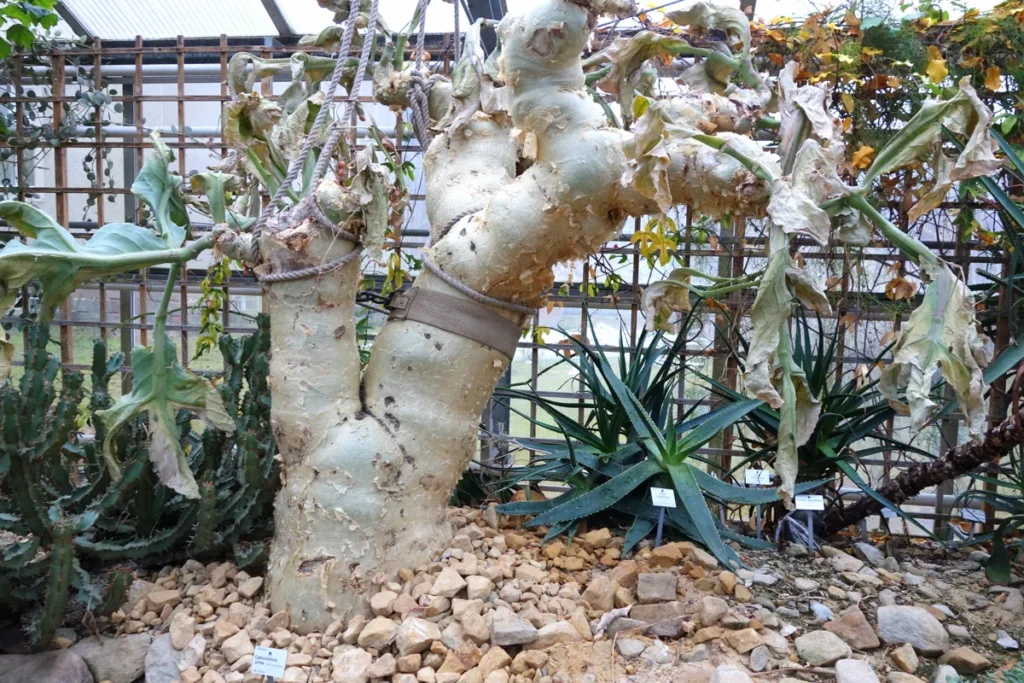
If a leafy catalogue photograph differs from the bare-branched plant in your quotation, ask what changed before approving it. Check whether the current plant meets your buying specification. A leafless photograph alone cannot establish dormancy, rooting condition or readiness for dispatch.
For a nursery or plant shop sourcing caudex plants from China, the useful comparison is between the offered plant’s dated condition record and the condition you have agreed to buy.
Does the seasonal explanation fit this species?
Start with the full plant name and catalogue code. Ask the nursery when the offered plant lost its leaves, whether any foliage was removed during preparation, and what it has observed since. A general label such as “winter dormant” leaves those questions unanswered.
Published cultivation accounts give reasons to ask different questions. They describe plants in particular settings; they do not predict the stage of a specimen in a Chinese nursery or its next growth date at a U.S. destination.
| Catalogue selection | Published context | Question for the nursery |
|---|---|---|
| Cyphostemma juttae, CAP-K0092 | SANBI’s South African account describes mainly summer growth and leaves falling in winter. | When did this specimen lose its leaves, and are the photographs from its present stage? |
| Pachypodium namaquanum, CAP-K0101 | SANBI describes winter growth and leaves falling in the hot summer in its southern African account. | What growth stage has this nursery observed? Avoid assigning the same seasonal calendar to every caudex plant. |
| Bursera fagaroides, CAP-K0005 | The University of Arizona profile describes leaf drop in response to drought or cold. | Did leaves drop during cultivation, or were they removed? What condition was recorded before the change? |
Sources: SANBI on Cyphostemma juttae, SANBI on Pachypodium namaquanum, and the University of Arizona’s Bursera fagaroides profile. Keep the nursery’s actual observations beside the species account. Do not transfer Southern Hemisphere months directly to a Chinese or U.S. growing schedule.
What should the current condition record contain?
Request a dated view of the whole plant and a second view of its branch structure, with the same specimen code visible. If the quotation is for a size-graded group, ask which photographs show representative plants and which show the whole proposed group. Several attractive specimens do not establish the condition of every plant on the order.
| Record | What to ask for | What it resolves |
|---|---|---|
| Photograph date and identity | Current dated views linked to a specimen or group code; identify any older display photograph. | Whether you are comparing the offered plant with its own earlier appearance. |
| Persistent structure | Stem or base measurements and branch views, with the measuring points stated. | Whether the quoted grade includes foliage, branch spread or only the swollen base. |
| Current roots | Whether the plant is established in its container, newly rooted, unrooted, or still awaiting a root check. | Which rooting condition the quotation actually covers. |
| Preparation changes | Any proposed pruning, defoliation or root work, with a further check after preparation if needed. | Whether the approved appearance will change before packing. |
For a plant still growing in a container, agree when roots can be reviewed during normal preparation. Avoid unnecessary disturbance solely to produce another photograph. Keep an unresolved root check open in the order record; an overhead photograph cannot close it.
How should you decide whether to approve the offer?
If you are buying a specific specimen, record the individual code and the current stem and branch outline you accept. For a group purchase, agree the acceptable variation in structure and current foliage stage. Leave any plants that need further review on separate quotation lines.
When the nursery’s explanation is incomplete, ask for the missing observation or a later condition check before approving preparation. If a proposed change would remove part of the structure you selected, request an updated photograph and confirm acceptance in writing. Do not use an expected leaf-out date as a substitute for the current condition record.
Give your receiving team the same coded photographs and measurements. Keep the leafy display reference separate so the team knows which image records the agreed handover condition. Record packing and freight scope separately in the quotation; a seasonal explanation does not establish the condition at arrival.
Send a request the nursery can answer
Please quote the following caudex selection: [plant name and code], [quantity], [required base and structural height measurements], for [destination].
Please provide current dated photographs, describe the present leaf stage and any recent change, and confirm the current rooting condition. Identify any pruning or other preparation proposed before packing. If a root or condition check is still pending, state when we can review it before approval.
For species-specific selection details, use the Cyphostemma stem and seasonal-form guide or the Bursera starter-versus-display guide. This condition check belongs with those measurements when you compare an offer.
Buyer questions
Should the quoted height include the leaves?
Ask the nursery to distinguish persistent stem or branch height from the temporary foliage outline and to state the measuring points. Keep leaf spread as an additional field when it affects your display plans.
Can I require a leafy plant for a retail display?
Yes. Put the required foliage stage in your enquiry and ask whether the proposed material can meet it at the agreed review stage. If that stage cannot be confirmed, discuss another selection or timing before approving the order. Do not assume a leafless plant will reach your display requirement by a particular date.
Browse the wholesale catalogue, then send the plant codes, sizes, quantities and destination with your condition questions.