Wholesale Pelargonium triste: Tuber Measurements and Growth Stage
Buy Pelargonium triste from China using clear tuber measurements, leaf-stage records and specimen approval photos. Prepare a practical wholesale enquiry.
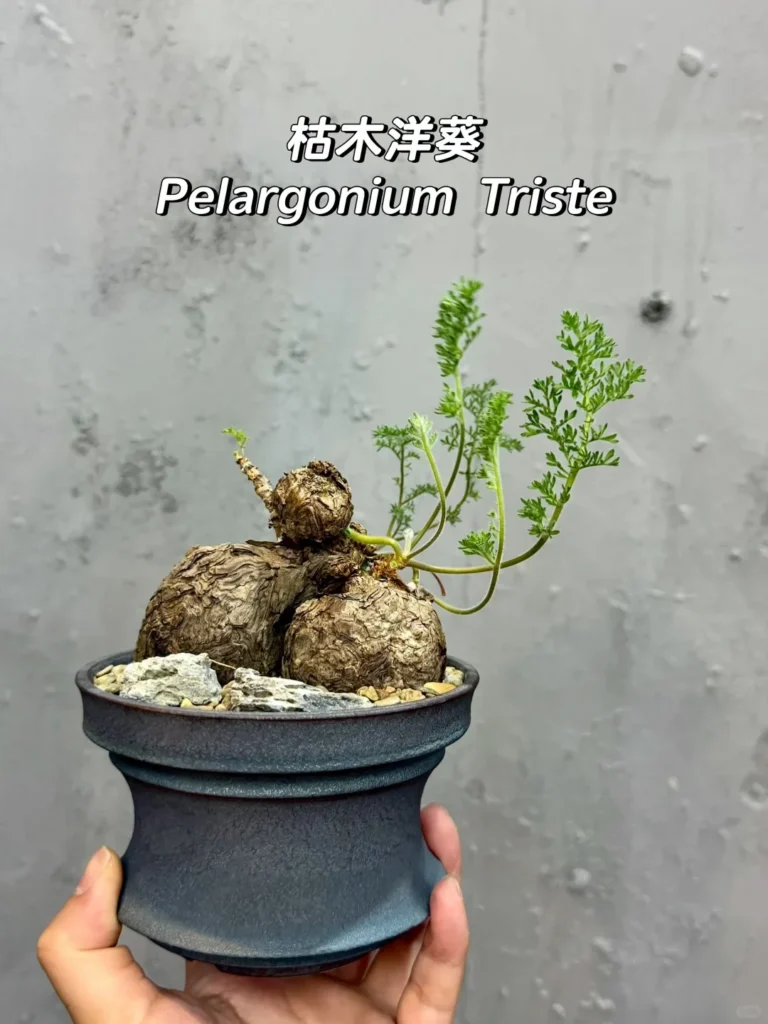
For wholesale Pelargonium triste, ask how much of the tuber is visible and what growth stage the proposed plants are in. A leafy display photograph can leave both questions unanswered. Record the tuber measurement and the current leaf condition before comparing prices.
Understand the tuber behind the display
Kew accepts Pelargonium triste in Geraniaceae and describes it as a tuberous geophyte. SANBI’s PlantZAfrica profile describes a large underground tuber with woody, cracked bark and divided, hairy leaves. It is a different purchasing proposition from a branching caudex tree: the visible portion may show only part of the storage organ.
Our Pelargonium triste catalogue entry, CAP-K0058, gives you an enquiry code. Specify whether you want an exposed tuber display or a less exposed nursery presentation. The code does not reserve the photographed individual or establish a fixed tuber size.
Separate visible size from the supplier’s measurement
Ask the supplier to mark the measurement points and the soil line on the same photograph. If the widest part is below the surface, a stated total width needs supporting information. You can first request existing nursery records or photographs taken during normal handling; discuss any further inspection before the plant is disturbed.
| Buying field | What to record | Question for the supplier |
|---|---|---|
| Tuber measurement | Width, measurement position and visible or total extent | Which part of the plant does this size describe? |
| Display height | Height of the exposed tuber above the soil | Will the proposed presentation retain this soil line? |
| Growth stage | Leafless, new shoots or developed leaves, with photo date | What has the nursery observed recently? |
| Propagation and roots | Supplier’s recorded propagation method and proposed root presentation | Is it seed-grown, a cutting or a division, and what records support that? |
| Quotation unit | One reserved specimen or an agreed grade | How are separate tubers, divisions or multiple plants counted? |
Keep container dimensions separate. A deep pot or decorative top dressing can hide the lower outline. Avoid assigning an age from exposed size or bark texture; request a propagation date if age matters to the buying decision, and retain any gap in the supplier’s record.
Ask about the current stage, not just the month
SANBI describes dormancy during the dry season and renewed leaf growth when rain returns. It also records a cultivated collection that retains leaves under summer watering and excellent drainage. These observations give buyers a reason to ask about the nursery’s actual conditions instead of assuming every plant follows an identical calendar.
Leaflessness alone does not confirm dormancy or good condition. Request dated whole-plant and close views, a recent growth account and clarification of any visible concern. Keep a dormant-grade request separate from a request for plants already carrying leaves for retail display. Discuss how the proposed stage fits your receiving space and sales plan.
Agree the presentation before packing
PlantZAfrica recommends a well-drained growing mixture and describes withholding water during dormancy. This is cultivation context, not a fixed instruction for every newly received plant. Ask for handling advice tied to the selected plant’s current stage, roots and recent watering.
If leaves or shoots might be shortened, approve the proposed change on a photograph first. Ask how labels will stay with the correct item and how the exposed tuber will be supported. On receipt, record the package and plant code, compare the visible outline with the approved views, and document any discrepancy before repotting or changing the display.
Prepare a Pelargonium enquiry
Send CAP-K0058, quantity, target tuber measurements, preferred leaf stage and destination through the Pelargonium triste enquiry form. Include the receiving state and postcode for a U.S. enquiry. Ask for current proposed plants and confirmation of whether the quotation reserves individuals or a representative grade.
For a mixed order, keep each Pelargonium species on its own line in your plant shortlist. Request the quoted packing and transport scope separately from the plant specification. The receiving checklist provides a record format you can adapt for item labels and arrival photographs.
Questions about the proposed grade
Is a larger exposed tuber necessarily a larger whole plant?
Confirm how it was measured. Different soil lines can expose different portions, so compare measurements taken at agreed points.
Can a leafless plant be ordered for immediate leafy display?
Ask the nursery about its current growth stage and choose an appropriate proposed plant. A leafless photograph cannot establish when a retail leaf display will develop.