Wholesale Pachypodium namaquanum: Trunk Profile, Crown and Approval
Compare Pachypodium namaquanum from China by trunk outline, base measurements, leaf crown and source records. Prepare a specimen-based wholesale enquiry.
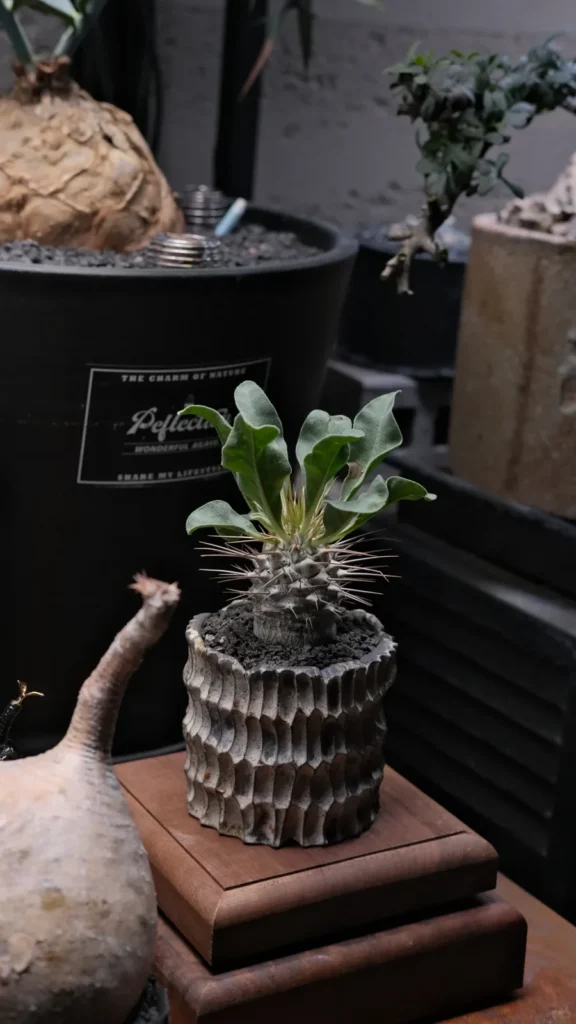
Specify the whole trunk outline when buying wholesale Pachypodium namaquanum. A short plant with a broad base and a taller plant with a narrow profile can need very different display space. Before requesting a wholesale quote, decide whether you need an individual specimen or a group within a defined size range.
Use the species name and keep its source record
Kew accepts Pachypodium namaquanum in Apocynaceae and places its native range from southern Namibia to the northwestern Cape region. A genus-level description of Pachypodium that also mentions Madagascar should not be used as this southern African species’ origin record.
SANBI describes a cylindrical, spiny stem, usually unbranched but sometimes branching, with crowded leaf rosettes near the tip. The leaves have a velvety surface and wavy edges. These are useful background features when discussing a selection, but they do not establish the identity, age or origin of an offered plant from one photograph.
Use CAP-K0101 as the catalogue reference and ask for the supplier’s label, propagation history and nursery source record. A catalogue page is a starting point for an enquiry, not confirmation of stock or of a shipment’s eligibility. The exact species, source and destination need a documentation review before an order proceeds.
Build a profile record for the proposed plant
Request a photograph from the front and another from the side, with the growing-medium line visible. If the trunk leans or branches, ask for an additional angle. Write down which view defines the appearance you are approving and keep the same plant code in every image.
| Record | How to make the comparison | What to keep separate |
|---|---|---|
| Exposed trunk height | Measure from the growing-medium line to the stem tip and show the ruler | Leaf height and the part hidden below the medium |
| Base and upper trunk | Show the widest visible base and a stated upper measuring point | Pot diameter, spine tips and any unverified age claim |
| Branching or lean | Record the widest outline and the approved viewing angle | A different specimen used only to illustrate a general form |
| Crown and surface | Request a recent close-up of the stem tip, leaves, spines and visible marks | Root condition and the cause of any mark |
| Root presentation | Ask whether the proposed plant is potted, rooted in another agreed format or grafted | Photographs that hide the base or do not show the root system |
Where an upper measurement is important, agree its distance above the growing-medium line. That gives the supplier a repeatable reference point. Ask for a suitable root or graft-union view where available, and record any part that cannot be inspected before purchase. Do not treat a thick stem as proof that the plant is on its own roots.
Ask about the current leaf crown
SANBI describes summer dormancy in its southern African growing context. A Chinese nursery photograph should be dated and accompanied by the current growing conditions. Use those observations when discussing leaf stage, rather than transferring a southern-hemisphere calendar directly to every cultivated plant.
If the leafy crown matters to your display, make that part of the approval record and ask how a change before packing will be communicated. A leafless photograph alone cannot establish whether the plant is resting or in poor condition. Request an explanation and supporting observations for any unexpected change.
Carry the specimen code into the packing record
For an individually chosen plant, keep its supplier code on the final approval images and packing list. Agree whether any replacement needs your written approval. If buying a size grade, request the number of plants in each profile band and examples of the variation included.
Give receiving staff the approved trunk views, current leaf-stage record and any unresolved inspection questions. Ask the supplier how the projecting spines, stem tip and any branches will be protected. Record the proposed packing without treating it as a guarantee of arrival condition or a fixed transit time.
For a wholesale enquiry from China, send CAP-K0101, the preferred profile, measurements, quantity and destination through the quotation form. If you are comparing several species, use the broader Pachypodium sourcing guide for the initial shortlist, then keep namaquanum’s specimen record separate.
Questions before approving a selection
Can I estimate age from trunk height?
Height is a size measurement, not an age record. Ask for the supplier’s propagation and growing history if age affects your buying decision, and keep unverified estimates out of your retail description.
Can a front photograph replace an inspection of the base?
No. Ask for the base and growing-medium line to be visible from another angle. If root or graft information cannot be verified, keep that limitation attached to the enquiry before you agree the grade.