Wholesale Fockea edulis from China: Caudex Sizes & Root Grades
Source wholesale Fockea edulis from China with clear caudex measurements, root evidence, specimen or batch grades, quotation fields and buyer questions.
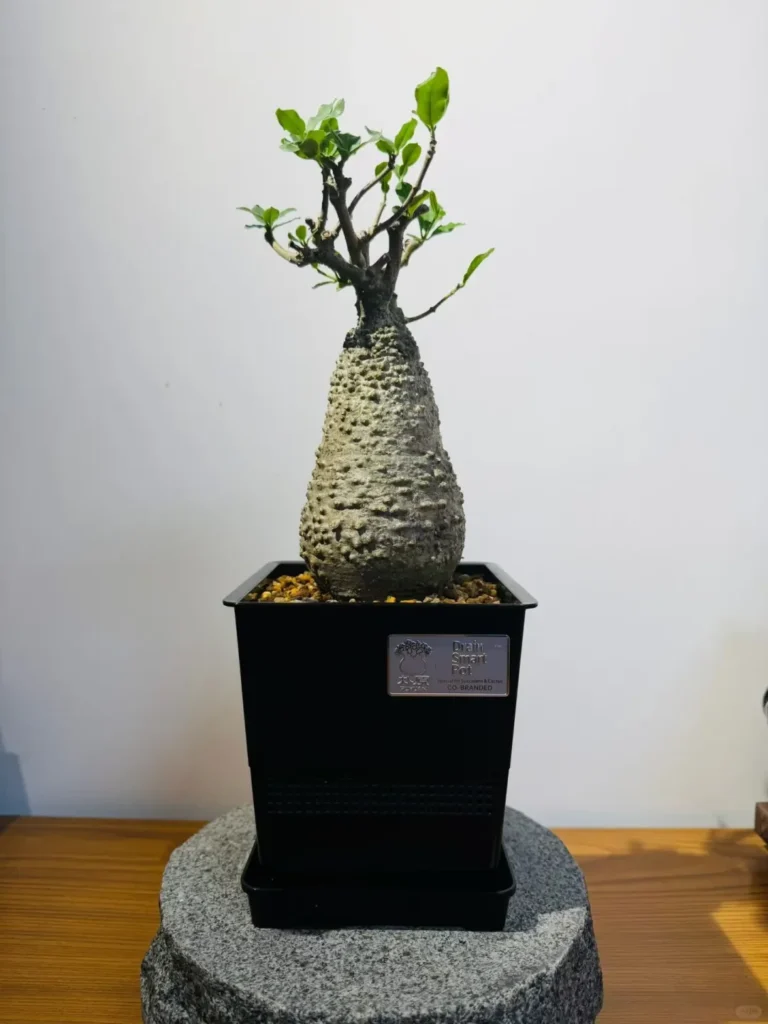
For a nursery or specialist retailer buying wholesale Fockea edulis from China, a photograph and a pot size leave important questions unanswered. A useful inquiry separates the swollen base, vine growth, roots and selling unit, then asks the supplier to quote those specifications consistently.
Start with Fockea edulis, catalogue reference CAP-K0021, and build a measurement and photo record around the plants proposed for your order. Catalogue photographs help communicate plant form; they do not replace a dated batch review.
Confirm the botanical identity first
Kew’s Plants of the World Online accepts the name Fockea edulis (Thunb.) K.Schum. and describes it as a climbing tuberous geophyte. This helps explain why a long leafy vine and a substantial tuber are different purchasing measurements.
Ask the supplier to put the scientific name on the quotation and photo label. Retain a seller’s local or trade name as an additional reference, rather than replacing the botanical identification with it. A source listing or a single image alone cannot authenticate a plant or establish its cultivation history.
Measure the caudex independently of the vine
Agree where each dimension begins and ends. If only the exposed base is visible, record that fact instead of estimating the hidden portion from the pot. Use a ruler in the same plane as the measured section and state centimetres; inches can be added using 1 inch = 2.54 cm.
| Field | What to record | Why the buyer needs it |
|---|---|---|
| Exposed caudex width | Widest visible point, excluding branches and pot | Compare the displayed base across quotations |
| Exposed caudex height | Substrate line to the agreed top of the swollen base | Distinguish squat and elongated forms |
| Vine or shoot length | Separate measurement with trimming status | Plan handling and presentation |
| Root condition | Rooted, recently handled or other confirmed condition, with evidence | Assess the receiving and establishment workload |
| Shipped form | Proposed bare-root or permitted media arrangement, subject to destination checks | Compare preparation and packing assumptions |
| Selling unit | One identified specimen or a specified batch grade | Understand what the quoted unit actually covers |
Do not convert these dimensions into a claimed age. A pot diameter is a container measurement, and vine length is not a substitute for the size of the swollen base.
Define root grades with evidence
A phrase such as “well rooted” is difficult to compare unless both parties explain what it means. Ask when the proposed plants were last lifted or repotted, what root evidence is available and whether the stated condition applies to every plant or a sample. Record unconfirmed history as unconfirmed.
Where inspection can be done without unnecessary disturbance, request clear views of the roots and base. If only potted photographs are available, do not treat them as proof of hidden-root condition. Agree the next verification point before preparation for shipment. The caudiciform sourcing guide provides a broader supplier-review checklist.
Choose between individual specimens and batch grades
For sculptural specimens, assign an individual code and retain the approved front and side views. For a resale batch, define width and height bands, visible form differences, cosmetic limits and how many plants fall in each grade. A premium example at the front of a group should not silently define the entire batch.
Ask about visible scars, cut stems, uneven bases and other features relevant to your customers. Set acceptance criteria around observable condition rather than a blanket “perfect plants” request. Keep cultivation-source documentation as a separate inquiry item; plant shape does not prove nursery origin.
Compare quotations using the same scope
Send each supplier the same specification sheet. Ask for currency, unit basis, quantity by grade, proposed preparation, packing charges and the delivery point covered by the quote. Record any freight estimate separately from confirmed charges. Our quotation comparison method can also be used for a caudex buying list.
Before approving a trial, check that the proposed quantities match your receiving space and staff capacity. Agree how the supplier will identify plants, record preparation and report changes. If vine trimming is proposed, approve its scope and photographs before it is carried out.
Check the actual U.S. shipment requirements
For U.S. buyers, verify the exact botanical identity, country of origin, roots or media, plant dimensions and destination before agreeing a shipment. Consult USDA APHIS’s current import process and ACIR for the applicable requirements. This buying guide does not establish species admissibility or replace shipment-specific permit and document checks.
Request a Fockea wholesale quotation
Send a wholesale inquiry with CAP-K0021, your desired caudex dimensions, quantity, specimen or batch preference and destination country/state. Add a reference photo if you have a particular form in mind. WhatsApp our team to discuss the specifications and request pricing for the proposed plants.
Frequently asked questions
Should I buy Fockea edulis by pot size?
Use pot size as additional information. Specify the exposed caudex dimensions, root evidence and selling unit separately so different quotations describe comparable plants.
Does a long vine mean a larger or older caudex?
Do not use vine length to infer either. Record vine growth separately and request direct base measurements; age needs its own reliable history.
Can I select the exact plants in a wholesale order?
Ask whether the proposal is for individually coded specimens or a batch grade. Exact-plant selection requires identifiers and approval photos that remain linked to the packing record.