Echinocereus rigidissimus: How to Compare Spine Color
Compare Echinocereus rigidissimus spine color, subspecies labels and plant sizes. Use a photo checklist to agree a wholesale selection from China.
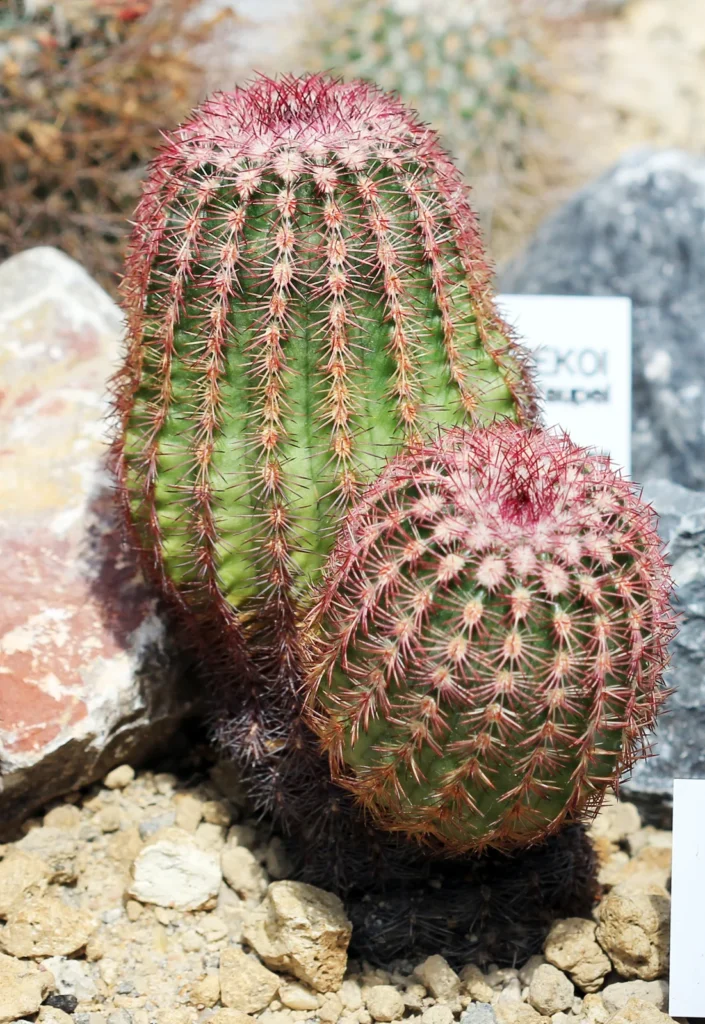
When requesting wholesale Echinocereus rigidissimus, describe where the strongest spine color should appear on the proposed plants. A red-spined crown and paler older spines can appear on the same plant. Set the acceptable appearance in current photographs before comparing a tray price.
Choose the species or subspecies line
Kew accepts Echinocereus rigidissimus in the cactus family, Cactaceae, with a native range from southeastern Arizona to southwestern New Mexico and northern Mexico. It also accepts subsp. rubispinus. Keep the subspecies on the quotation when that is the selection being requested.
The catalogue separates CAP-C0752, E. rigidissimus, from CAP-C0754, subsp. rubispinus. CAP-C0753 is the separately listed crested form. Crested describes its nursery growth form; it does not establish a further botanical subspecies. A particularly red photograph alone cannot confirm a subspecies label.
Describe the color grade in the photographs
The RHS describes new spines as reddish pink, becoming yellow or light pink as they mature. The radial spines curve slightly toward the stem. Compare the crown with the older growth lower down when setting the color grade; an evenly red appearance should not be assumed.
Ask for a whole-plant side view and a close view of the crown under the same light. Keep an unedited tray overview with those detail images so the chosen plant can be found again. Request a second view if strong lighting hides the stem or makes the spine color difficult to judge. Agree the grade from the original files; a saturation adjustment changes the evidence used for approval.
Describe the visible pattern in the buying record, such as a pink crown with pale lower spines. This is an appearance description of the photographed plant, not a promise that its color will remain unchanged. Record broken spines and conspicuous marks separately so they are not confused with the normal color change described above.
Put the selection grade into the quote
| Field | What to request | How to compare offers |
|---|---|---|
| Name and form | Catalogue code, supplier label and any subspecies or crest designation | Keep ordinary and crested forms on separate lines. |
| Plant dimensions | Body diameter excluding projecting spines, body height and total width including spines | Use the same measurement points and units for every offer. |
| Appearance | Whole-plant photograph, crown detail and any agreed tolerance for marks | Compare the same views under similar lighting. |
| Roots and propagation | Own-root or grafted status, current rooting condition and propagation record if known | Do not infer root status from the top view. |
| Selling unit | Number of separately rooted plants or individually approved specimens | Confirm whether several visible stems represent one sale unit or several. |
Use the batch photo checklist to connect these details to the supplier’s tray or specimen codes. Keep the selected photographs with the final quote when changes are agreed.
Prepare a suitable receiving bench
RHS cultivation guidance places this cactus under glass, in full sun, with a gritty, well-drained potting mix. It advises moderate watering during growth and no watering while dormant. Ask about the plants’ current growth stage and recent growing conditions so your nursery can prepare suitable light, drainage and handling.
A species profile cannot set a safe shipping temperature for a particular order. Discuss the proposed route and handling separately, and keep any transport agreement attached to the quote.
Questions before sending a buying list
Does a deeper red color prove that a plant is subsp. rubispinus?
No. Use the supplier’s identification record and the stated subspecies label. Spine color is an appearance criterion for the proposed selection, and a photograph alone does not authenticate the subspecies.
Can several stems in a photograph be counted as several plants?
Only after the supplier confirms the rooting and selling unit. Request a view that shows the bases or a written plant count linked to the photograph.
For a quotation discussion, send the catalogue codes, desired appearance, target sizes and quantities through our wholesale enquiry page. Include your destination and ask for current selection photographs.