Buying Melocactus matanzanus: is the cephalium part of the specification?
Specify the Melocactus matanzanus growth stage, measure the body and cephalium separately, and agree dated photo checks before approving a wholesale quote.
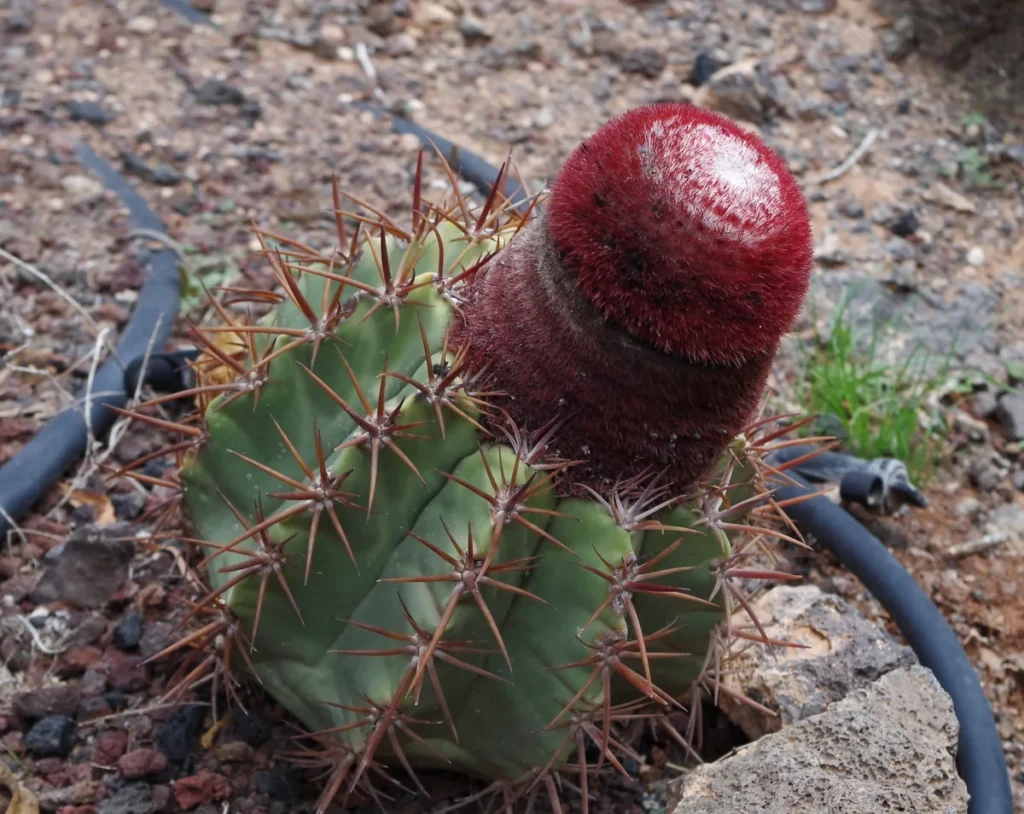
A Melocactus matanzanus reference may show a prominent bristly cap, while the wholesale quote lists only a body diameter. If that cap is part of the appearance you need for resale, specify it before comparing prices. A diameter-only offer leaves the required growth stage unresolved.
Does the order need a cephalium already present?
The cap is called a cephalium. Kew describes it as the terminal bristly or woolly flowering zone of mature Melocactus. That botanical feature gives buyers a useful distinction to record in an order. It does not establish the age, condition or availability of the plants being offered. Kew botanical reference.
If the display needs the cap now, write “cephalium already present” and request a dated side view of the offered plants. If plants without a cephalium suit your buying plan, state that explicitly. Keep the two specifications on separate quote lines. Do not assume that a capless plant will develop the appearance in a reference photograph by a planned resale date.
Start with the correct catalogue selection. Melocactus matanzanus, CAP-C0510, is separate from the variegated selection, CAP-C0945. The ordinary reference photograph does not illustrate the variegated selection. Neither code alone confirms that a cephalium is present on an offered plant. Kew accepts the species name Melocactus matanzanus León.
What should the size specification include?
Ask suppliers to use the same measurement method. Otherwise, a number that includes spines or the cephalium can be mistaken for the green body’s size. The following fields are a proposed buying specification, not measurements of the reference plant.
| Field | How to record it | What it resolves |
|---|---|---|
| Body diameter | State the green body’s widest diameter, excluding spines, in cm. | Separates body size from spine spread. |
| Body height | Agree the visible base point; measure to the body top or cephalium junction. Name that endpoint. | Prevents the cap from being counted as green body height. |
| Cephalium | Record present or absent. If present, record its height above the junction in cm and provide a side view. | Makes the requested stage visible in the specification. |
| Overall dimensions | Record total plant height and spine spread separately; list any pot dimensions separately. | Gives the packing discussion a defined starting point. |
| Rooting and preparation | Request the nursery’s current rooting description and proposed shipping preparation. | Keeps an above-ground photo from standing in for a root record. |
A buried base cannot be measured from a normal potted photo. Ask the nursery to identify that limitation rather than estimate a hidden dimension. If an age claim matters to the purchase, request its basis separately; do not treat cephalium height as an age certificate.
Which photos should you approve?
Request dated top and side views tied to the same catalogue code and quote line. Include a scale where the measurements need checking. Ask whether each image shows the exact plant, a representative group or a general reference. A group photograph should identify which stage and size range the quoted line covers.
Mark any visible area you need clarified and ask for a closer view and the nursery’s observation. A photograph can document appearance, but it cannot by itself establish internal condition or root health. Keep an unresolved line pending rather than filling those gaps with assumptions.
What must be agreed before packing?
Ask how the proposed arrangement will support the plant and provide clearance around the cephalium and spines. Request a packed view before handover if the order needs one. Agree which measurements and dated approval photos the receiving team will use, then record any change in preparation before dispatch.
These are questions for a specific packing plan. They do not establish a universal packing method or guarantee an arrival condition. For a wider quote checklist, see the wholesale cactus buying guide.
An enquiry the nursery can answer
Replace the brackets with your requirements. Keep an acceptable alternative on a separate line so it cannot silently replace the preferred stage.
Please quote CAP-C0510, Melocactus matanzanus, for [quantity] plants. Required stage: [cephalium already present / cephalium not required]. Body diameter: [range] cm, excluding spines. Please state body height and its measurement endpoints; if a cephalium is present, state its height separately. Include dated views of the offered plants or identified representative group, current rooting status, proposed preparation, and packing details. Destination: [city, state, ZIP code, country]. Please separate plant, packing and freight costs in the quotation.
Use the wholesale enquiry form to send the code and the stage you need. Availability and the offered condition must be confirmed for that enquiry.
Buyer questions
Does a catalogue photo confirm that the quoted plants have a cephalium?
No. Request dated evidence tied to the offered line and written confirmation that the required stage is included. A general reference cannot settle that point.
Should a quote promise flowers on arrival?
Keep an observed cephalium and a promise of flowers on a future date as separate claims. If flowers at a particular time matter, ask what evidence supports that condition before accepting it; this guide makes no flowering-date promise.