Wholesale Golden Barrel Cactus: Names, Spine Grades and Display Space
Source golden barrel cactus from China with clear Echinocactus and Kroenleinia names, nursery-form labels, body measurements and photo approval grades.
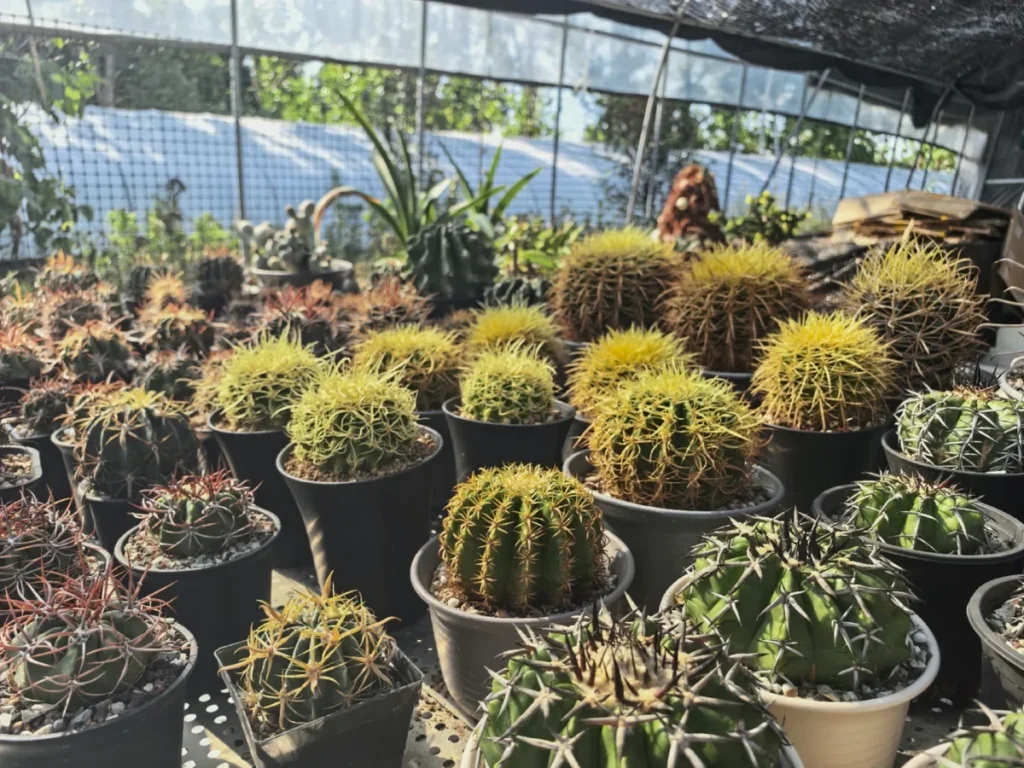
Specify the plant form before requesting a wholesale golden barrel cactus quote. A standard barrel, a plant with unusual spines and a crested selection can carry related names while needing separate buying grades. Keep those choices apart before asking suppliers to compare prices.
Match Echinocactus and Kroenleinia names
Kew accepts Kroenleinia grusonii and lists Echinocactus grusonii as a synonym. The familiar Echinocactus name remains in horticultural use, including the RHS golden barrel profile. On your buying list, put the supplier’s name beside the catalogue code so a name difference can be resolved without losing the intended selection.
Start a standard-species enquiry with Kroenleinia grusonii, CAP-C0385. The catalogue also separates nursery forms. Their labels describe the selection being discussed; a nursery form name should not automatically be presented as an accepted botanical variety.
Quote contrasting forms on separate lines
| Selection | Keep on the quote | Ask to see before approval |
|---|---|---|
| Standard species selection | CAP-C0385, body dimensions and quantity per grade | Top and side views showing ribs, spine coverage and the base |
| Pale-spined nursery form | The exact supplier label, including “albispinus” if used | Several proposed plants in consistent light, with visible variation |
| Reduced-spine nursery form | The exact supplier label, including “inermis” if used | Close views of the whole body; confirm what spine coverage is included |
| Crested or other unusual growth form | Individual plant code, overall width and the outline being offered | Front, back and side views of the actual selected specimen |
The catalogue has separate nursery-form references for CAP-C0841 and CAP-C0842. Give each nursery form its own quote line. Confirm the supplier’s identification and propagation record for the proposed plants; the photograph by itself does not authenticate either.
Measure the body and the space around it
The RHS describes the species as a deeply ribbed, barrel-shaped cactus with yellowish spines. Request body diameter with projecting spines excluded, body height, and the widest span including spines. Pot diameter belongs in another field. The outer span matters when planning shelf spacing and discussing packing clearance.
For unusual growth forms, record the widest and narrowest outline as well as height. Ask the supplier to show the ruler’s position in the photograph. A width taken from a different angle can make two genuinely different specimens look like the same grade on paper.
Set an appearance grade before comparing prices
Ask whether the quotation covers the exact photographed plants or a range selected to a written grade. For a batch grade, review a whole-group image and examples from different positions. List the visible marks or spine damage that you will accept, and have exceptions identified by code.
Keep appearance separate from root and propagation information. If the root presentation changes before packing, ask for that change to be recorded with the approved quote. The quotation comparison guide covers fees and delivery scope, so you can compare those after matching the plants.
Prepare the receiving and display space
The RHS recommends cultivation under glass in a gritty, well-drained compost, with moderate watering during growth and dry conditions during dormancy. It also notes that excessive humidity can mark the surface. Use this as cultivation background when planning a protected growing area. Ask the supplier for the proposed plants’ recent growing conditions; general care advice does not define a safe shipping temperature or arrival treatment.
For a U.S. nursery or plant-shop enquiry, send the catalogue codes, preferred forms, body dimensions, quantities and destination ZIP code through the wholesale quotation form. Request confirmation of the proposed selection and delivery scope before approving an order.
Golden barrel buying questions
Should Echinocactus grusonii and Kroenleinia grusonii be two order lines?
The names can refer to the same species. Check whether the supplier is describing the same form and grade before combining them. Different nursery forms still need separate specifications even when the botanical species is the same.
Does an “inermis” label guarantee a completely spineless plant?
Do not use the label as the entire appearance specification. Ask for current close-ups and record the spine coverage you will accept for that selection.